Dyeing the Landscape: Fiber-Reactive Dyes for Hand-Printed Tea Towels
Before the blocks, there was the color.
My background in fiber, studying at Kansas City Art Institute and Cranbrook Academy of Art, gave me a love for working across multiple disciplines: dyeing, printing, weaving, sewing, and papermaking. I like having all of those tools available and choosing the one that best communicates an idea.
When I began making my hand-printed tea towels, I printed them entirely by hand, using blocks I designed and carved covering the entire fabric. I still love that process, but repeatedly inking and pressing blocks onto fabric can be hard on my hands, arms, and back.
So, I went back to my fiber roots and started experimenting with dyeing the fabric first.
At first, I tried natural dyes that I use to dye my yarn. The colors were beautiful, but the process required heat and constant stirring to keep the dye evenly distributed. After several attempts, I realized that while I loved the results, the process wasn't sustainable for the amount of fabric I wanted to make.
Enter fiber-reactive dyes.
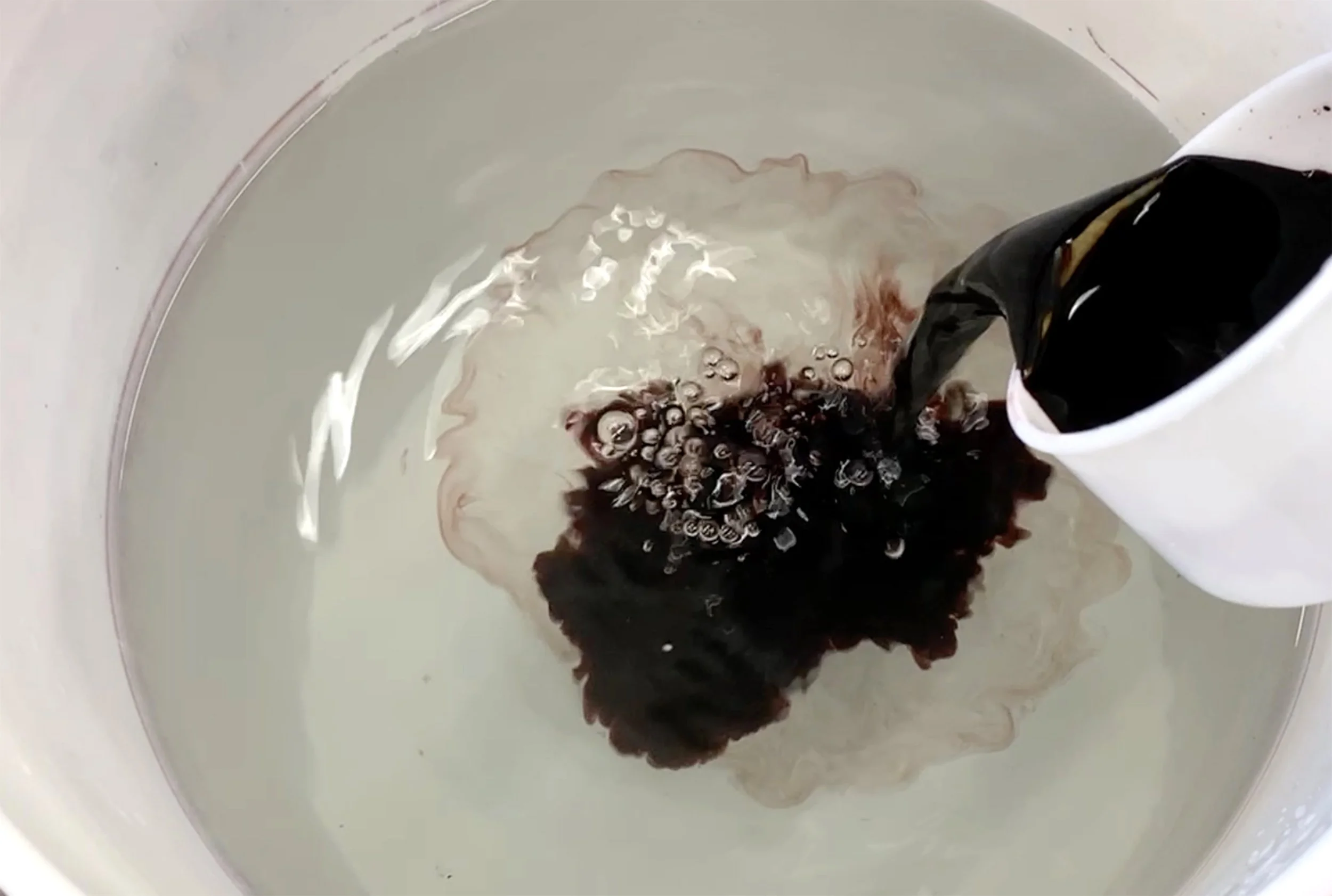
Procion MX–type fiber-reactive dyes work without the need to heat the dye bath and are particularly well suited to cotton and other cellulose fibers.
Instead of trying to make the color perfectly even, I decided to embrace the opposite.
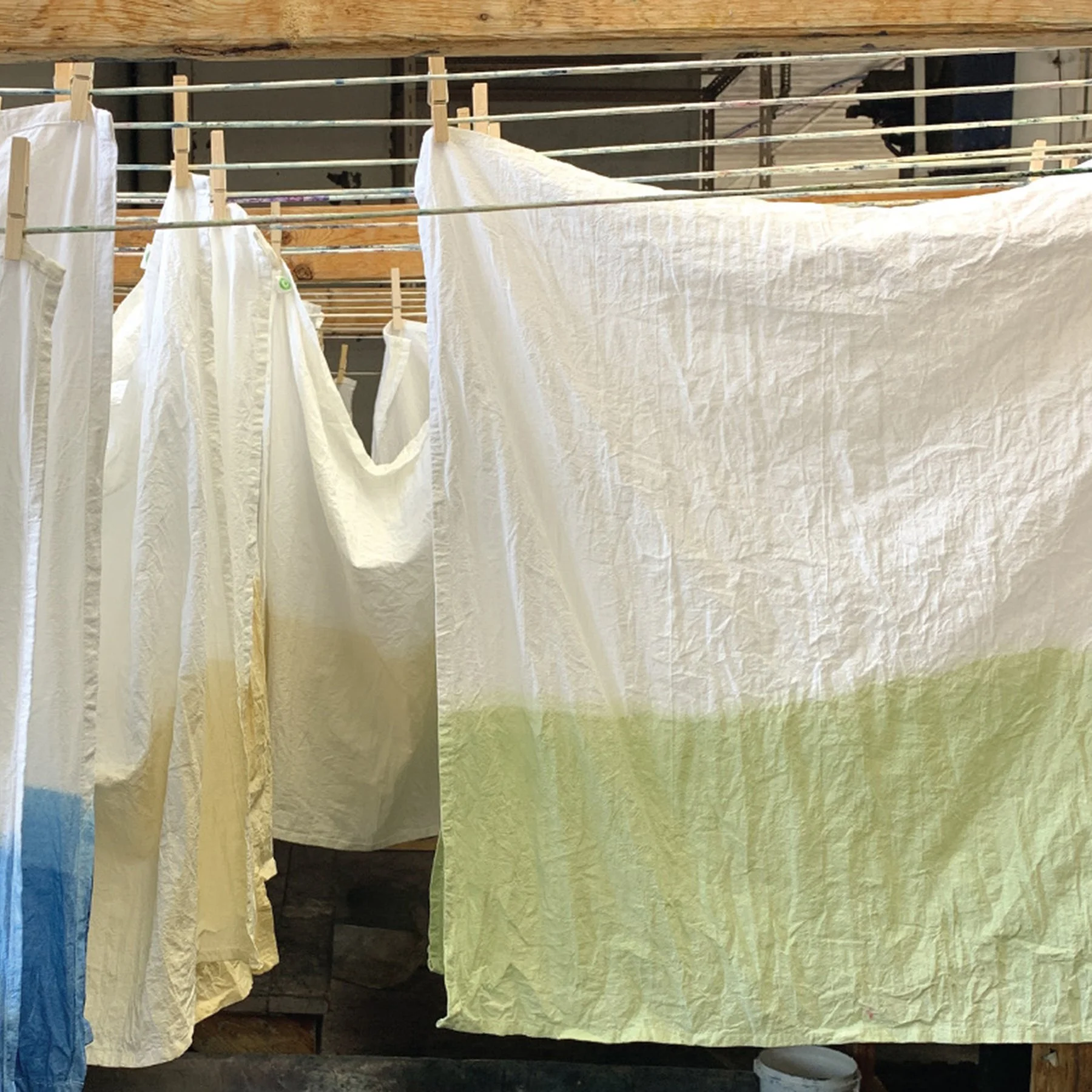
I hang each tea towel in a large bucket and let the dye move through the fabric on its own. The result is a kind of textile landscape; each towel develops its own variations, edges, shifts, and unexpected marks.
That imperfection is exactly what I want.
I use browns for dirt, greens for grass, and blues for water and sky. Indigo is my favorite way to create the blues, but when I need a little help, fiber-reactive dye steps in.
Once the fabric has its landscape, I add the blocks.
The printed imagery becomes another layer of the story, interacting with whatever the dye has already created. A brown field might become soil. A wash of green becomes grass. A sweep of blue becomes the ocean.
The dyeing isn't simply the background anymore.
It becomes part of the landscape, and every piece is a little different.
That is one of the things I love most about working with textiles: you can plan the pattern, but you can never completely control the material.
Not Just a Pretty Picture: The Art, Process, and Language Behind the Prints explores twenty patterns from my studio, including the ideas, processes, and hidden language behind the work.